
From kite string to loom, five designers bring cotton to Casa de Criadores 58
A kite becomes a cutout, a zipper gives shape to anxiety and a bird from Maranhão inspires fabric volumes.
Modelliq Editorial Team ·
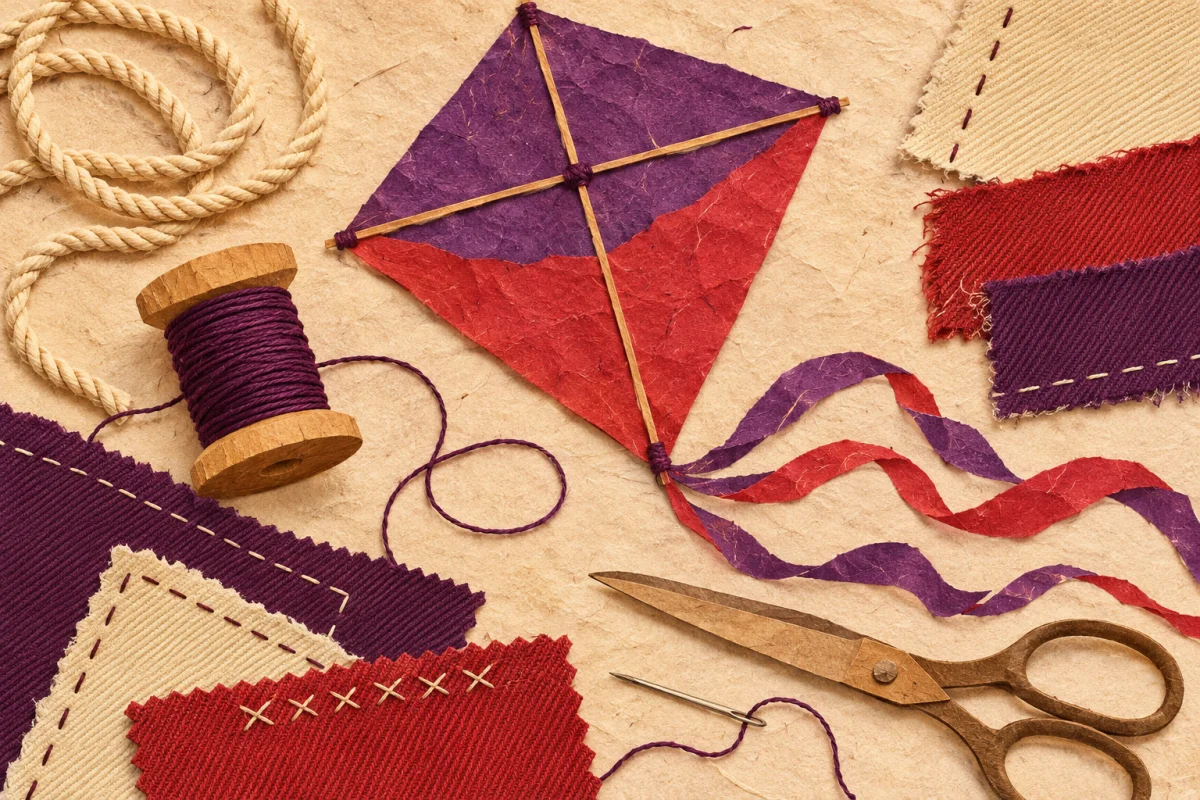
On Friday, November 27, Casa de Criadores 58 hosts the final of the 4th Desafio Sou de Algodão. The five finalists of the 2026 edition are Alexandre Freitas da Silva, Liz Santos de Sousa, Nayara Pereira de Souza, Daniel dos Santos e Santos and Michael Insfran Britez. The collections hit the runway in the 8 p.m. block, at Edifício Gazeta, in São Paulo. Official schedule · Finalists · Venue
Alexandre uses sewing to draw a kite's path on the fabric. Liz leaves the seam exposed to speak about an Amazon under pressure. Profiles
The competition received 776 entries. Each of Brazil’s five regions has one finalist. Each student will show six looks, and the winner is expected to be announced at the end of the runway session. Abrapa
Alexandre's kite cutouts and Liz's patches
For Alexandre, from IESB, flying kites in the street brought relief from the conflicts he witnessed at home. The student represents the Center-West. He brings that memory to the pattern. Alexandre's profile
The geometric cutouts divide the cloth, the nautical cord ties the parts together and the visible seams mark the path of the threads. There's reuse of material and patchwork, the joining of scraps into a panel. Sou de Algodão
In Colapso Amazônida, Liz starts from the Cabanagem, a revolt that marked Pará, to imagine a future for the region. The student at Universidade da Amazônia brings that history closer to science fiction and Belém's urban culture. Interview with Redz
In the collection, the ties tighten and the cotton escapes the structure that tries to contain it. An exposed patch is part of the clothing. In the piece that earned her a spot as a finalist, Memória Contaminada, Liz addresses river pollution. Profiles · O Liberal
Nayara's X stitches and Daniel's macramé
For the 100% cotton twill look, Nayara Pereira de Souza, from FAAP, chose a detachable zipper and X stitches made with crochet thread. The zipper lets the piece open. The crossed stitches suggest containment. Piece details
In O Grito do Corpo, Nayara explores how to dress a physical sensation of anxiety. The designer from the Southeast researched the topic in her final course project. Edvard Munch's painting O Grito is among her references. Nayara · Profiles
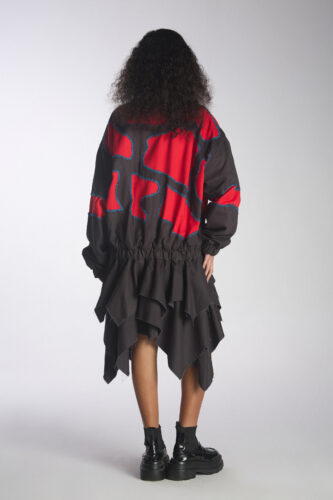
In the back view published in June, black bands curve over the red. Further down, a dark edge ends in points of different lengths. It's a view of the piece shown in the selection. Photograph on Nayara's profile
The scarlet ibis (guará) of the Maranhão coast, where Daniel dos Santos e Santos grew up, inspires Festa no Céu. The Senai Parangaba student represents the Northeast. Starting from a cage shape, he plans to reach the volume of the feathers. Daniel's project
The collection combines tulle and macramé, a technique of knotting threads. Daniel imagines red to mark the bird's maturity. For those watching the six looks, it's worth noticing when the silhouette opens up. Sou de Algodão
Michael brings his research on the poncho and ñanduti to the loom
Michael Insfran Britez studies at Udesc, in Santa Catarina. The representative from the South grew up in the Paraguayan community that works in São Paulo's textile industry. Hence the name he gave the collection, Brasiguayo. Michael's profile
Michael looked for references in the poncho para’í and ñanduti lace. In Paraguayan lace, the threads open like rays from the center of each circle. The lacemaker works with a needle over a frame. Udesc · Paraguayan culture
To create the fabric for Brasiguayo, Michael also experimented with material combinations on the loom. OCTAmag
Choosing the loom shifts a decision that usually belongs to the cutting table. Before laying the pattern over ready-made cloth, Michael can decide how the threads will cross in the fabric he plans to cut.
Two tests that fit on the cutting table
Make a seam swatch card. Cut three squares of the same twill. Join each one to another scrap with the same thread, changing only the distance from the seam to the edge. Compare up close and then from the distance of a shop window.
Wash the samples the way the future piece would be washed. Note which edge curled, which seam stiffened and how long each finish took. These are concrete criteria for choosing what deserves to move from scrap to pilot piece.
Try lacing on a sample garment. Start with a familiar pattern and add a cord along one side of the sample. During the fitting, check where the fabric bunches as the cord tightens and whether the wearer can adjust it without help.
Show the shop owner both positions, the cost of the cord and the sewing time. The runway suggests the experiment. The batch size depends on how much it costs to repeat the detail and how customers react to the pilot piece.
Discover Modelliq